NEWS

What are you interested in?

All topics
Arts
Social Sciences
Life Sciences
Medicine
Management
Engineering
Law
Humanities
General
Exact Sciences
Environment
Removal of Cancerous Tumors Without Surgery

Research

Nov 22nd, 2022
Removal of Cancerous Tumors Without Surgery

New technology from Tel Aviv University, combining ultrasound and nanobubbles, destroys tumors, eliminating need for invasive treatments

  • Medicine
  • Engineering

A new technology developed at Tel Aviv University makes it possible to destroy cancerous tumors in a targeted manner, via a combination of ultrasound and the injection of nanobubbles into the bloodstream. Unlike invasive treatment methods or the injection of microbubbles into the tumor itself, this latest technology enables the destruction of the tumor in a non-invasive manner.


The study was conducted under the leadership of doctoral student Mike Bismuth from the lab of Dr. Tali Ilovitsh at Tel Aviv University’s Department of Biomedical Engineering, in collaboration with Dr. Dov Hershkovitz of the Department of Pathology. Prof. Agata Exner from Case Western Reserve University in Cleveland also participated in the study. The study was published in the journal Nanoscale.


“Our new technology makes it possible, in a relatively simple way, to inject nanobubbles into the bloodstream, which then congregate around ​​the cancerous tumor. After that, using a low-frequency ultrasound, we explode the nanobubbles, and thereby the tumor.”  Dr. Tali Ilovitsh


Bursting Bubbles – and Tumors

Dr. Tali Ilovitsh: “Our new technology makes it possible, in a relatively simple way, to inject nanobubbles into the bloodstream, which then congregate around ​​the cancerous tumor. After that, using a low-frequency ultrasound, we explode the nanobubbles, and thereby the tumor.”


The researchers explain that today, the prevalent method of cancer treatment is surgical removal of the tumor, in combination with complementary treatments such as chemotherapy and immunotherapy.


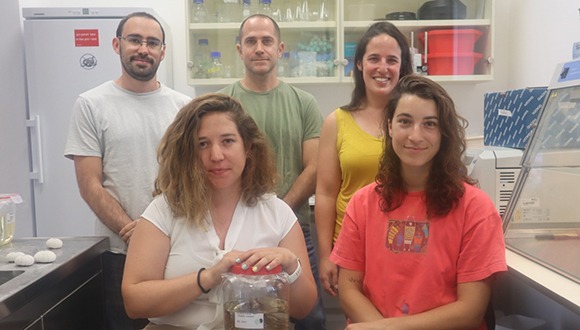
The research team


Therapeutic ultrasound to destroy the cancerous tumor is a non-invasive alternative to surgery. This method has both advantages and disadvantages. On the one hand, it allows for localized and focused treatment; the use of high-intensity ultrasound can produce thermal or mechanical effects by delivering powerful acoustic energy to a focal point with high spatial-temporal precision. This method has been used to effectively treat solid tumors deep within in the body. Moreover, it makes it possible to treat patients who are unfit for tumor resection surgery. The disadvantage, however, is that the heat and high intensity of the ultrasound waves may damage the tissues near the tumor.


“The combination of nanobubbles and low frequency ultrasound waves provides a more specific targeting of the area of the tumor and reduces off-target toxicity." Dr. Tali Ilovitsh


Reducing Off-target Damage

In the current study, Dr. Ilovitsh and her team sought to overcome this problem. In the experiment, which used an animal model, the researchers were able to destroy the tumor by injecting nanobubbles into the bloodstream (as opposed to what has been until now, which is the local injection of microbubbles into the tumor itself), in combination with low-frequency ultrasound waves, with minimal off-target effects.


“The combination of nanobubbles and low frequency ultrasound waves provides a more specific targeting of the area of the tumor, and reduces off-target toxicity," explains Dr. Ilovitsh.


"Applying the low frequency to the nanobubbles causes their extreme swelling and explosion, even at low pressures. This makes it possible to perform the mechanical destruction of the tumors at low-pressure thresholds."


"Our method has the advantages of ultrasound, in that it is safe, cost-effective, and clinically available, and in addition, the use of nanobubbles facilitates the targeting of tumors because they can be observed with the help of ultrasound imaging.”


Dr. Ilovitsh adds that the use of low-frequency ultrasound also increases the depth of penetration, minimizes distortion and attenuation, and enlarges the focal point. “This can help in the treatment of tumors that are located deep with the body, and in addition facilitate the treatment of larger tumor volumes. The experiment was conducted in a breast cancer tumor lab model, but it is likely that the treatment will also be effective with other types of tumors, and in the future, also in humans.”

The Thinnest Possible Ladder

Research

Nov 21st, 2022
The Thinnest Possible Ladder

Tel Aviv researchers reveal two-dimensional crystals exhibiting unique control of distinct electric potential steps

  • Exact Sciences

Tel Aviv University research reveals two-dimensional crystals exhibiting a unique control of distinct electric potential steps by sliding atomically thin layers against each other. The consecutive, ultimately thin, electrical switches reported are a highly desired resource for information technology and novel electro- and optomechanical applications.


The research, now published in Nature journal, was conducted by Dr. Swarup Deb, M.Sc. student Noam Raab, Prof. Moshe Goldstein, and Dr. Moshe Ben Shalom, all from the Raymond & Beverly Sackler School of Physics & Astronomy at Tel Aviv University, and Dr. Wei Cao, Prof. Michael Urbakh and Prof. Oded Hod from the Chemistry School at TAU, and Prof. Leeor Kronik from the Weizmann Institute.


"We are fascinated by how the atoms in a condensed matter order, how electrons mix with the atoms, and whether external stimulus can manipulate the atomic order and the electric charge distribution." Dr. Moshe Ben Shalom


Turning to Crystals

"We are fascinated by how the atoms in a condensed matter order, how electrons mix with the atoms, and whether external stimulus can manipulate the atomic order and the electric charge distribution," says Dr. Moshe Ben Shalom, head of the Quantum Layered Matter Group.


"Answering these questions is challenging due to the enormous number of atoms and electrons, even in the tiniest devices of our most advanced technologies. One of the tricks is to study crystals, which contain much smaller units, each including only a few atoms and electrons."


"While crystals are made of many identical units, repeated periodically in space, their properties are entirely deduced from the one unit-cell symmetry and the details of the few atoms it captures. And still, it is challenging to understand and predict these details since the electrons spread over all the atoms simultaneously as determined by their joint quantum mechanical interactions."


One way to probe the atomic order and the electronic charge distribution is to break the symmetry of the cells to induce internal electric fields. Crystals with permanent internal electric fields are called "polar crystals". In 2020 the same lab at TAU reported a novel polar crystal by stacking together two layers of a van der Waals crystal, with each layer only one atom thick.


"The natural order in which these crystals grow is symmetric, with each successive layer rotated by 180 degrees compared to the previous one. Here, one type of atoms is positioned precisely above the other type. Conversely, the artificial crystals assembled in the lab are not rotated, resulting in a slight shift between the layers, thus straying away from the fully symmetric configurations. This non-symmetric crystal structure forces electrons to jump from one layer to another, forming a permanent electric field between them," recaps Dr. Ben Shalom.


Ladder ferroelectrics


"We are now developing such tunneling devices in a stealth phase company called Slide-Tro LTD, established with the University and an external investor. We believe that a wide slew of devices from low power electronics to robust non-volatile memories are feasible with this technology." Dr. Moshe Ben Shalom


"The Thinnest Possible"

"Crucially, the group found that applying external electric fields makes the layers slide back and forth to match the direction of the electron's jump with the external field orientation. They named the phenomena 'interfacial ferroelectricity' and pointed out the unique domain-wall motion that governs the 'Slide-Tronics' response," explains Ben Shalom.


"The ferroelectric response we discovered is in a two-atoms thick system, the thinnest possible. It is therefore highly appealing for information technologies which are based on electronic quantum tunneling," says Ben Shalom.  


"We are now developing such tunneling devices in a stealth phase company called Slide-Tro LTD, established with the University and an external investor. We believe that a wide slew of devices from low power electronics to robust non-volatile memories are feasible with this technology."


Climbing the Crystalline Ladder

"From a fundamental science perspective, the discovery pointed us to new questions: How does the electric charge order? And how does the electric potential grow if we stack additional layers to further break or restore the symmetry of the crystals? In other words, instead of thinning down crystals as was vastly explored to date, we could now assemble new polar crystals, layer by layer, and probe the electric potential at any step of the crystalline ladder."


In the experiment, the researchers compared adjacent few layers thick domains with different back / forward shifts between the various layers, resulting in different polarization orientations. For example, in four layers (with three polar interfaces), there are four allowed configurations: all pointing up ↑↑↑, one down and two up ↑↑↓, two down and one up ↑↓↓, and all down ↓↓↓.


"We were excited to find a ladder of distinct electric potentials which are separated by nearly even steps, such that each step can be used as an independent information unit," says Noam Rab, a student conducting the measurements.


"This is very different from any polar thin film known to date, where the polarization magnitude is very sensitive to many surface effects and where the polar orientation switches at once between two potentials only”.


"Sliding and Climbing a Ladder-Ferroelectric": The periodic crystal is made of two different atoms, repeating with constant separations in each horizontal layer. Sliding the layers to the right or left positions, to position the red atom above the blue (or vice versa), makes electrons jump up (or down) between the layers. Unlike common polar crystals, the interfacial ferroelectric system exhibits distinct, evenly spaced electric potential steps which can serve as individual information units.


"The most likely directions of future research that we envision is manipulating more electronic orders like magnetism and superconductivity by sliding different crystal symmetries to form novel Ladder-Multiferroics." Dr. Wei Cao


According to Dr. Swarup Deb, a leading author of the paper, the researchers found that, "the internal electric fields remain substantial even if we add external electrons to the system to make it both conductive and polar. Typically, the external charge screens off the internal polarization, but in the present interfacial ferroelectrics, the extra electrons could only flow along the layers without jumping between them too much, to mute down the out-of-plane electric field”.


Dr. Wei Cao, one of the other leading authors adds: “With the help of theoretical calculations based on quantum mechanical principles, we identified the precise distribution of the polar charge and the conducting charge. The former is highly confined to the interfaces between the layers and hence protected from external perturbations."


"The calculations allowed us to predict which crystals are most resilient to the extra charge and how to design even better Ladder-Ferroelectrics. The most likely directions of future research that we envision is manipulating more electronic orders like magnetism and superconductivity by sliding different crystal symmetries to form novel Ladder-Multiferroics."

Aerobic Activity can Reduce Risk of Metastatic Cancer by 72%

Research

Nov 14th, 2022
Aerobic Activity can Reduce Risk of Metastatic Cancer by 72%

Tel Aviv University researchers find that exercise defeats cancer by increasing glucose consumption

  • Medicine

A new study at Tel Aviv University found that aerobic exercise can reduce the risk of metastatic cancer by 72%. According to the researchers, intensity aerobic exercise increases the glucose (sugar) consumption of internal organs, thereby reducing the availability of energy to the tumor.  


The study was led by two researchers from TAU's Sackler Faculty of Medicine: Prof. Carmit Levy from the Department of Human Molecular Genetics and Biochemistry and Dr. Yftach Gepner from the School of Public Health and the Sylvan Adams Sports Institute. The paper was published in the prestigious journal Cancer Research and chosen for the cover of the November 2022 issue


"If the general message to the public so far has been 'be active, be healthy', now we can explain how aerobic activity can maximize the prevention of the most aggressive and metastatic types of cancer." Prof. Carmit Levy and Dr. Ytach Gepner


Enhanced Rate of Glucose Consumption

Previous studies have demonstrated that physical exercise reduces the risk for some types of cancer by up to 35%. This positive effect resembles the impact of exercise on other conditions, such as heart disease and diabetes.


In this study, Prof. Levy and Dr. Gepner added new insight, showing that high-intensity aerobic exercise, which derives its energy from sugar, can reduce the risk of metastatic cancer by as much as 72%. "If the general message to the public so far has been 'be active, be healthy'," they say, "now we can explain how aerobic activity can maximize the prevention of the most aggressive and metastatic types of cancer."


The study combined lab models trained under a strict exercise regimen, with data from healthy human volunteers examined before and after running. The human data, obtained from an epidemiological study that monitored 3,000 individuals for about 20 years, indicated 72% less metastatic cancer in participants who reported regular aerobic activity at high intensity, compared to those who did not engage in physical exercise.


The animal model exhibited a similar outcome, enabling the researchers to identify its underlying mechanism. They found that aerobic activity significantly reduced the development of metastatic tumors in the lab models' lymph nodes, lungs, and liver. The researchers hypothesized that in both humans and model animals, this favorable outcome is related to the enhanced rate of glucose consumption induced by exercise.


"Physical exercise, with its unique metabolic and physiological effects, exhibits a higher level of cancer prevention than any medication or medical intervention to date." Dr. Yftach Gepner


From left to right: Prof. Carmit Levy and Dr. Yftach Gepner


"Exercise Changes the Whole Body"

"Our study is the first to investigate the impact of exercise on the internal organs in which metastases usually develop, like the lungs, liver, and lymph nodes," explains Prof. Levy.


"Examining the cells of these organs, we found a rise in the number of glucose receptors during high-intensity aerobic activity - increasing glucose intake and turning the organs into effective energy-consumption machines, very much like the muscles. We assume that this happens because the organs must compete for sugar resources with the muscles, known to burn large quantities of glucose during physical exercise. Consequently, if cancer develops, the fierce competition over glucose reduces the availability of energy that is critical to metastasis."


"Moreover," she offers, "when a person exercises regularly, this condition becomes permanent: the tissues of internal organs change and become similar to muscle tissue. We all know that sports and physical exercise are good for our health. Our study, examining the internal organs, discovered that exercise changes the whole body, so that the cancer cannot spread, and the primary tumor also shrinks in size."  


Prof. Levy emphasizes that by combining scientific knowhow from different schools at TAU, the new study has led to a very important discovery which may help prevent metastatic cancer – the leading cause of death in Israel.


"Our results indicate that unlike fat-burning exercise, which is relatively moderate, it is a high-intensity aerobic activity that helps in cancer prevention," adds Dr. Gepner. "If the optimal intensity range for burning fat is 65-70% of the maximum pulse rate, sugar burning requires 80-85% - even if only for brief intervals."


"For example: a one-minute sprint followed by walking, then another sprint. In the past, such intervals were mostly typical of athletes' training regimens, but today we also see them in other exercise routines, such as heart and lung rehabilitation. Our results suggest that healthy individuals should also include high-intensity components in their fitness programs. We believe that future studies will enable personalized medicine for preventing specific cancers, with physicians reviewing family histories to recommend the right kind of physical activity. It must be emphasized that physical exercise, with its unique metabolic and physiological effects, exhibits a higher level of cancer prevention than any medication or medical intervention to date."  

New Hope for Patients with Severe Bone Loss

Research

Nov 10th, 2022
New Hope for Patients with Severe Bone Loss

Researchers induced bone regeneration with a special hydrogel that mimics the bone's natural environment

  • Medicine

An innovative technology developed at Tel Aviv University will enable bone regeneration to correct large bone defects by means of a special hydrogel. Following successful tests in a lab model, the researchers now plan to move forward to clinical trials.


The groundbreaking study was conducted by experts from TAU's Maurice and Gabriela Goldschleger School of Dental Medicine, led by Prof. Lihi Adler-Abramovich and Dr. Michal Halperin-Sternfeld, in collaboration with Prof. Itzhak Binderman, Dr. Rachel Sarig, Dr. Moran Aviv, and researchers from the University of Michigan in Ann Arbor. The paper was published in the Journal of Clinical Periodontology.


Prof. Adler-Abramovich: "Small bone defects, such as fractures, heal spontaneously, with the body restoring the lost bone tissue. The problem begins with large bone defects. In many cases, when substantial bone loss results from tumor resection (removal by surgery), physical trauma, tooth extraction, gum disease or inflammation around dental implants, the bone is unable to renew itself. In the current study, we developed a hydrogel that mimics the natural substances in the extracellular matrix of bones, stimulating bone growth and reactivating the immune system to accelerate the healing process."


The researchers explain that the extracellular matrix is the substance surrounding our cells, providing them with structural support. Every type of tissue in our body has a specific extracellular matrix consisting of suitable substances with the right mechanical properties. The new hydrogel has a fibrillary structure that mimics that of the extracellular matrix of the natural bone. Furthermore, it is rigid, thus enabling the patient’s cells to differentiate into bone-forming cells.


WATCH: Lab of Bioinspired Materials: A Tour with TAU Prof. Lihi Adler-Abramovich


"As can be expected, the extracellular matrix of our bones is quite rigid," says Prof. Adler-Abramovich. "In our study, we produced a hydrogel that mimics this specific matrix in both chemical and physical properties. At the nanometric level, the cell can attach itself to the gel, gaining structural support and receiving relevant mechanical signals from the fibers. At first, to test these properties, we grew cells in a 3D model of the gel. Then we examined the impact of the hydrogel on model animals with large bone defects that could not heal spontaneously. We monitored them for two months with various methods, including Micro C.T. To our delight, the bone defects were fully corrected through regeneration, with the bones regaining their original thickness, and generating new blood vessels."


According to Prof. Adler-Abramovich, the innovative gel has extensive clinical applications in both orthopedic and dental medicine: "When we lose teeth due to extensive damage or bacterial infections, the standard treatment is dental implants. Implants, however, must be anchored in a sufficient amount of bone, and when bone loss is too substantial, physicians implant additional bone from a healthy part of the body – a complex medical procedure. Another option is adding bone substitutes from either human or animal sources, but these might generate an immune response. I hope that in the future the hydrogel we have developed will enable faster, safer, and simpler bone restoration."  

Breakthrough Treatment May Improve Efficacy of Chemotherapy in Breast Cancer Patients

Research

Nov 8th, 2022
Breakthrough Treatment May Improve Efficacy of Chemotherapy in Breast Cancer

TAU-developed treatment may reduce risk for lung metastasis following chemo from 52% to only 6%

  • Medicine

A new treatment developed at Tel Aviv University may significantly enhance the efficacy of chemotherapy in breast cancer patients, reducing the risk for lung metastasis following chemo from 52% to only 6%. Conducted in a lab model, the study identified the mechanism that generates a cancer-promoting inflammatory environment in response to chemotherapy. Moreover, the researchers found that by adding an anti-inflammatory agent to the chemotherapy, metastasis can be prevented.


The study was led by Prof. Neta Erez of the Department of Pathology at TAU's Sackler Faculty of Medicine, and researchers from her group: Lea Monteran, Dr. Nour Ershaid, Yael Zait, and Ye'ela Scharff, in collaboration with Prof. Iris Barshack of the Sheba Medical Center and Dr. Amir Sonnenblick of the Tel Aviv Sourasky (Ichilov) Medical Center. The paper was published in Nature Communications. The study was funded by ERC, the Israel Cancer Association, and the Emerson Cancer Research Fund.


The Dark Side of Chemo

"In many cases of breast cancer, surgical removal of the primary tumor is followed by a chemotherapy regimen intended to kill any remaining malignant cells – either left behind by the surgeon or already colonizing in other organs," explains Prof. Erez. "However, while effectively killing cancer cells, chemotherapy also has some undesirable and even harmful side effects, including damage to healthy tissues. The most dangerous of these, is probably internal inflammations that might paradoxically help remaining cancer cells to form metastases in distant organs. The goal of our study was to discover how this happens and try to find an effective solution."


To this end, the researchers created an animal model for breast cancer metastasis. The animals received the same treatment as human patients: surgical removal of the primary tumor, then chemotherapy, followed by monitoring to detect metastatic relapse as early as possible. The disturbing results: metastatic tumors were detected in the lungs of a large percentage of the treated animals - similar to the percentage found in the control group.


"In humans, this interval between chemotherapy and detection of metastatic tumors is an inaccessible 'black box.' Working with an animal model, we could check what happens inside this 'box'." Prof. Neta Erez


What's Going on Inside the "Black Box"?

To decipher these adverse effects, the researchers examined the animals' lungs at an intermediate stage – when tiny micro-metastases may have already developed, but even advanced imaging technologies like CT cannot detect them.


"In humans, this interval between chemotherapy and detection of metastatic tumors is an inaccessible 'black box'," says Prof. Erez. "Working with an animal model we could check what happens inside this 'box'."


"We discovered a previously unknown mechanism: the chemotherapy generates an inflammatory response in connective tissue cells called 'fibroblasts', causing them to summon immune cells from the bone marrow. This, in turn, creates an inflammatory environment that supports the micro-metastases, helping them grow into full-fledged metastatic tumors. In this way, the chemotherapy, administered as a means for combating cancer, achieves the opposite result."


The researchers also identified the mechanism through which fibroblasts recruit immune cells, and 'train' them to support the cancer. "We found that in response to chemotherapy, the fibroblasts secrete 'complement proteins' – proteins that mediate cell recruitment and intensify inflammation, often by summoning white blood cells to damaged or infected areas, a process called chemotaxis," notes Prof. Erez. "When the immune cells reach the lungs, they create an inflammatory environment that supports cancer cells and helps them grow."


"We identified an inflammatory mechanism through which chemotherapy inadvertently supports the growth of metastatic tumors, and also discovered an effective solution: combining chemotherapy with an inflammation inhibitor." Prof. Neta Erez


Potential to Save Many Lives

To combat this newly discovered process, the researchers combined the chemotherapy administered to the animals with a drug that blocks the activity of complement proteins.


The results were very encouraging: following the combined treatment, the percentage of lab models developing no metastases rose from 32% to 67%; and the percentage of those with extensive cancer colonization in their lungs decreased from 52% with regular chemotherapy to 6% when the inflammation inhibitor was added.


"We discovered the mechanism behind a severe problem in the treatment of breast cancer: many patients develop metastatic tumors following removal of the primary tumor plus chemotherapy," says Prof. Erez, and concludes: "We identified an inflammatory mechanism through which chemotherapy inadvertently supports the growth of metastatic tumors, and also discovered an effective solution: combining chemotherapy with an inflammation inhibitor. We hope that our findings will enable more effective treatment for breast cancer, and perhaps other types of cancer as well – to prevent metastatic relapse and save numerous lives worldwide."  

Drones Against Illegal Waste Dumpsites (photo: Adi Mager)

Research

Nov 8th, 2022
Drones Against Illegal Waste Dumpsites

Use of drones to map illegal waste dumps could promote recycling and save Israel NIS 200 million

  • Environment

A new study conducted at Tel Aviv University has mapped illegal construction waste dumps using drones. The researchers attempted to assess the actual amounts of construction waste dumped at unauthorized sites, as well as the contents of the waste piles. Analysis of the data shows that through aerial mapping and use of environmental-economic models developed in the study, it will be possible to recycle a significant amount of the waste, saving the state approximately NIS 200 million.


The study was led by Dr. Vered Blass and doctoral student Adi Mager of the Porter School of Environment and Earth Sciences, Tel Aviv University. The study was published in the international journal Remote Sensing.


An Expensive Process

The current situation poses a severe problem for local authorities, who cannot handle the scope of criminal activity, and therefore compelled to remove and treat the environmental hazard on their own expenses.


The moment a local authority identifies an illegal construction waste dump, it takes action to transfer the waste to an authorized site. This involves a complex process including, initially, measuring the amount of waste, collecting, and transporting it to the authorized treatment facility, and then cleaning and rehabilitating the contaminated soil.


This is an expensive process involving significant budgetary spending by municipalities, which usually pass the burden on to the taxpayers.


"The idea behind the study was to try and adopt the principles of circular economy (CE) that promotes strategies for savings in resources for reuse, repair, remanufacture, and recycling of materials and products." Dr. Vered Blass


Recycling Instead of Landfilling

The alternative? "By integrating existing aerial mapping technologies, with economic-environmental models, we can promote recycling of illegal waste and save public funds," offers Dr. Blass. "Instead of paying landfill fees and polluting the soil, the waste may be recycled at a lower cost while reducing environmental damage."


According to Dr. Blass, the study, defined as a pilot, included mapping by drones of four illegal waste dumps located in Northern Israel. The researchers mapped and analyzed a total area of 3600 square meters. They classified and categorized all types of waste separately, manually, to determine their area, volume, and properties.


Dr. Vered Blass


Finally, the researchers created a profile for each waste site separately. The profile included an economic analysis of the value of the different types of waste found at the site, and the potential environmental savings of recycling compared to landfilling.


"The idea behind the study was to try and adopt the principles of circular economy (CE) that promotes strategies for savings in resources for reuse, repair, remanufacture, and recycling of materials and products," explains Dr. Blass. "By using these principles, we sought to save the authorities a lot of money – instead of paying high landfill fees for all the illegal construction waste, which can be recycled."


"Our pilot findings showed the advantages of multidisciplinary tools and methodologies in helping to identify potential resources, providing economic data for cleanup proposals, and of course, enabling the monitoring and evaluation of the area after the cleanup, thus saving time and money for the authorities, entrepreneurs and other stakeholders in the field" Dr. Vered Blass


Saving Time and Money

According to the researchers, the study provides missing data that may prove useful to the state, local authorities, commercial companies, and contractors, as well as companies that monitor and manage recycled waste and raw materials.


In addition, the researchers touch on the direct correlation between meeting international sustainable development goals (SDG), monitoring, and mapping illegal waste.


"This study will provide local authorities with a better understanding of the quantities and qualities of waste, as well as the costs associated with the necessary cleanups," says doctoral student Adi Mager. "Moreover, construction waste in open areas occupies valuable real estate. Mapping the area rapidly and efficiently will assist in evacuating the land and preparing it for future uses."


"Our pilot findings showed the advantages of multidisciplinary tools and methodologies in helping to identify potential resources, providing economic data for cleanup proposals, and of course, enabling the monitoring and evaluation of the area after the cleanup, thus saving time and money for the authorities, entrepreneurs and other stakeholders in the field," concludes Dr. Blass. 

Pressure Chamber Therapy Effective in Improvement of Autism

Research

Nov 7th, 2022
Pressure Chamber Therapy Effective in Improvement of Autism

TAU study shows that treatment may significantly improve social abilities and condition of the autistic brain

  • Social Sciences
  • Psychology

A new Tel Aviv University study succeeded in significantly improving social skills and the condition of the autistic brain through pressure chamber therapy. The study was conducted on lab models of autism. In it, the researchers identified changes in the brain, including a reduction in neuroinflammation, which is known to be associated with autism. Moreover, a significant improvement was found in the social functioning of the animal models treated in the pressure chamber. The study’s success has many implications regarding the applicability and understanding of treating autism using pressure chamber therapy.


The breakthrough was made under the leadership of doctoral student Inbar Fischer, from the laboratory of Dr. Boaz Barak of Tel Aviv University’s Sagol School of Neuroscience and School of Psychological Sciences. The research was published in the International Journal of Molecular Sciences.


Considered Safe

Fischer and Barak explain that hyperbaric medicine is a form of therapy in which patients are treated in special chambers where the atmospheric pressure is higher than the pressure we experience at sea level, and in addition are delivered 100 percent oxygen to breathe.


Hyperbaric medicine is considered safe and is already being used to treat a long list of medical conditions, including here in Israel. In recent years, scientific evidence has been accumulating that unique protocols of hyperbaric treatments improve the supply of blood and oxygen to the brain, thereby improving brain function.


Improving Brain Function

“The medical causes of autism are numerous and varied, and ultimately create the diverse autistic spectrum with which we are familiar," explains Dr. Barak:. "About 20% of autistic cases today are explained by genetic causes, that is, those involving genetic defects, but not necessarily ones that are inherited from the parents. Despite the variety of sources of autism, the entire spectrum of behavioral problems associated with it are still included under the single broad heading of ‘autism,’ and the treatments and medications offered do not necessarily correspond directly to the reason why the autism developed.”


In the preliminary phase of the study, a girl carrying the mutation in the SHANK3 gene, which is known to lead to autism, received treatments in the pressure chamber, conducted by Prof. Shai Efrati, director of the Sagol Center for Hyperbaric Medicine at the Shamir “Assaf Harofeh” Medical Center, faculty member at the Sagol School of Neuroscience, and a partner in the study. After the treatments, it was evident that the girl’s social abilities and brain function had improved considerably.


In the next stage, and in order to comprehend the success of the treatment more deeply, the team of researchers at Dr. Barak’s laboratory sought to understand what being in a pressurized chamber does to the brain. To this end, the researchers used lab models carrying the same genetic mutation in the SHANK3 gene as that carried by the girl who had been treated. The experiment comprised a protocol of 40 one-hour treatments in a pressure chamber over several weeks.


“We discovered that treatment in the oxygen-enriched pressure chamber reduces inflammation in the brain and leads to an increase in the expression of substances responsible for improving blood and oxygen supply to the brain, and therefore brain function," explains Dr. Barak. "In addition, we saw a decrease in the number of microglial cells, immune system cells that indicate inflammation, which is associated with autism."


 Increased Social Interest

“Beyond the neurological findings we discovered, what interested us more than anything was to see whether these improvements in the brain also led to an improvement in social behavior, which is known to be impaired in autistic individuals,” adds Dr. Barak. “To our surprise, the findings showed a significant improvement in the social behavior of the animal models of autism that underwent treatment in the pressure chamber compared to those in the control group, who were exposed to air at normal pressure, and without oxygen enrichment. The animal models that underwent treatment displayed increased social interest, preferring to spend more time in the company of new animals to which they were exposed in comparison to the animal models from the control group.”


Inbar Fischer concludes, “the mutation in the animal models is identical to the mutation that exists in humans. Therefore, our research is likely to have clinical implications for improving the pathological condition of autism resulting from this genetic mutation, and likely also of autism stemming from other causes. Because the pressure chamber treatment is non-intrusive and has been found to be safe, our findings are encouraging and demonstrate that this treatment may improve these behavioral and neurological aspects in humans as well, in addition to offering a scientific explanation of how they occur in the brain.”

Ukrainian Citizens Display High Resilience Amid Fighting

Research

Nov 2nd, 2022
Ukrainian Citizens Display High Resilience Amid Fighting

Ukrainian People show more national resilience than Israelis did during Operation "Guardian of the Walls"

  • Medicine

A first-of-its-kind study conducted by Tel Aviv University has found that the national resilience of the citizens of Ukraine, who are currently fighting for their independence, is comparatively very high (4.35) on a scale of 1 to 6. It is, in fact, significantly higher than the national resilience that characterized Israeli citizens (3.89) at the height of "Operation Guardian of the Walls" in May 2021.


The researchers explain this difference by saying that whereas Ukrainian citizens now find themselves fighting for their homeland and are ready to do anything to win the war, the rounds of fighting in Gaza have become a kind of recurrent nuisance for the citizens of Israel, accompanied by a moderate level of national resilience.


The study was led by Prof. Bruria Adini and Prof. Shaul Kimhi of the ResWell Research Center at Tel Aviv University’s Sackler Faculty of Medicine.


Ukrainian Citizens Still Have Hope

According to the researchers, the current study constitutes the first attempt by academic researchers to assess Ukrainian citizens’ positive and negative coping indices during wartime. The study indicates that in such conditions of conflict, a population may experience high levels of stress and, simultaneously, high levels of societal resilience and hope for the future.


In the current situation in Ukraine, the population has also demonstrated a great deal of support for their government.


The study surveyed 1000 Ukrainian citizens, as well as a sample of about 650 Israeli citizens using data collected during Operation Guardian of the Walls. The study’s findings suggest that the danger, in the eyes of Ukrainian citizens, is perceived as much more tangible (3.7 on a scale of 1 to 5) than Israelis’ perception of danger in the rounds of fighting against Hamas in Gaza (2.45). The perception of threat amongst Ukrainians is also more significant (3.29) than among the citizens of Israel (2.79).


The researchers note that the younger population, those between the ages of 26 to 30, present higher levels of stress and post-traumatic stress symptoms compared to other age groups. Women report higher levels of all negative coping mechanisms in comparison to men.


Interestingly, despite the significant dangers and threats they face, Ukrainian citizens have not lost hope, with their ‘hope index’ being higher (an average of 3.95) than that of Israelis (an average of 3.5).


"Israelis, unlike the Ukrainian People, do not feel that their country is under a direct existential threat and have, to a certain degree, adapted to an ‘emergency routine’ due to the recurrent conflicts." Prof. Adini and Prof. Kimhi


Israelis Adapted to ‘Emergency Routine’

Prof. Adini and Prof. Kimhi explain that “the perception of a threat as existential to the survival and sovereignty of the state and society is likely, under certain conditions, to enhance the population’s societal resilience and sense of hope. This is the case even when the population feels anxious and threatened by the situation. "


"Moreover, it appears that the war launched by Russia against Ukraine has actually contributed to the process of Ukrainian identity-building, which also leads to increased levels of resilience, as well as an extremely high sense of hope."


"Israelis, unlike the Ukrainian People, do not feel that their country is under a direct existential threat and have, to a certain degree, adapted to an ‘emergency routine’ due to the recurrent conflicts. In light of this, they present lower levels of resilience relative to Ukrainians, but at the same time higher levels of well-being and morale.”

Tel Aviv University makes every effort to respect copyright. If you own copyright to the content contained
here and / or the use of such content is in your opinion infringing Contact us as soon as possible >>