

Tel Aviv University researchers monitored the physiological data of close to 5,000 Israelis over two years




Research
Tel Aviv University researchers monitored the physiological data of close to 5,000 Israelis over two years
In a first-of-its-kind study, researchers at Tel Aviv University equipped close to 5,000 Israelis with smartwatches and monitored their physiological parameters over two years. Of those monitored, 2,038 received the booster dose of the coronavirus vaccine, allowing the researchers to objectively compare measures before and after the participants took the vaccine, and confirm its safety.
In addition, in collaboration with the Kahn Sagol Maccabi Research & Innovation Center (KSM - the research and innovation institute of the Israeli Maccabi Healthcare Services), the researchers examined the safety of the booster by analyzing the medical files of 250,000 members of Maccabi Health Services anonymously (without identifying details) and with the approval of the Helsinki Committee. From the analysis of this large amount of data, the researchers were able to evaluate the safety of the vaccines from three perspectives: subjectively - what the participant reports, objectively - what the watch detects, and clinically - what the doctor diagnoses.
"We saw clear and significant changes after administration of the vaccine (…) and then we saw a return to the participant’s baseline, i.e., the pulse levels after vaccination returned to their previous levels after six days. Hence, our study confirms the safety of the vaccine." Prof. Dan Yamin
The research was carried out by PhD student Matan Yechezkel under the supervision of Prof. Dan Yamin, Head of the Laboratory for Epidemic Research and led in collaboration with Prof. Erez Shmueli, Head of the Big Data Laboratory, all from The Iby and Aladar Fleischman Faculty of Engineering at Tel Aviv University. Other collaborators were Dr. Tal Patalon and Dr. Sivan Gazit, Director and Deputy Director, respectively, of KSM, as well as Dr. Amichai Painsky and Ms. Merav Mofaz from Tel Aviv University. The results of the research were published in the prestigious journal, Lancet Respiratory Medicine.
As Prof. Yamin explains: "We wanted to test the safety of booster vaccines against the coronavirus. We conducted a large-scale, two-year clinical study during which we equipped 4,698 Israelis with smartwatches. The smartwatches were used to monitor several parameters such as heart rate, variation in heart activity, quality of sleep, number of daily steps taken, and more. In addition, the participants were asked to fill out daily questionnaires about their health status in a customized application that we developed. Finally, we analyzed data on potential unusual events from the medical files of a quarter of a million randomly selected, anonymous, insured members of the Maccabi Health Services."
Since the medical file contains the date the booster vaccine was administered, researchers were able to compare the condition of the vaccinated patient with his/her baseline condition from 42 days before receiving the vaccine to the condition of 42 days after receiving the vaccine. The data was obtained from the questionnaires, smartwatches, and records of the Maccabi Health Fund.
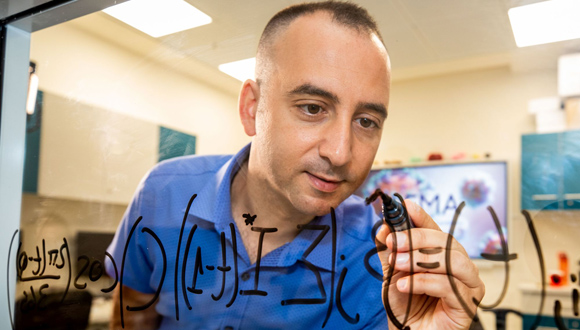
Prof. Dan Yamin
"We saw clear and significant changes after administration of the vaccine, such as an increase in heart rate compared to the pulse rate measured before vaccination," says Prof. Yamin, "and then we saw a return to the participant’s baseline, i.e., the pulse levels after vaccination returned to their previous levels after six days. Hence, our study confirms the safety of the vaccine."
"The research also allowed us to compare subjective and objective indicators and medical diagnosis of the same participant who received the first booster and a few months later the second booster," explains Prof. Yamin and adds, "We found no difference in the physiological response recorded by the smartwatches and that reported by the participant in the app."
"The smartwatch sensors 'felt' that the vaccine was safe, the vaccinee himself reported that the vaccine was safe, and finally, the doctors determined that the vaccine was safe. The results of the study have far-reaching implications regarding objective testing of vaccine safety in the future." Prof. Dan Yamin
In the medical literature, twenty-five unusual side effects attributed to the Corona vaccine were reported, and the researchers paid special attention to look for rare cases of inflammation of the heart muscle (myocarditis) and pericarditis. Prof. Yamin and his colleagues checked the frequency of these unusual side effects among a quarter of a million Maccabi members and found no increase in serious incidents of any kind associated with vaccination.
Prof. Yamin concludes: "If the watch reports any minor changes in the muscles, and the participant reports only significant changes he feels, the medical file tells us about unusual events diagnosed by the doctors as well as hospitalizations that may be related to vaccinations, with an emphasis on cardiac events. We did a comprehensive analysis of all those twenty-five unusual side effects, and we did not see an increase in their incidence among those receiving the booster. We found the vaccine to be safe to use. The smartwatch sensors 'felt' that the vaccine was safe, the vaccinee himself reported that the vaccine was safe, and finally, the doctors determined that the vaccine was safe. The results of the study have far-reaching implications regarding objective testing of vaccine safety in the future.”

Research
Tel Aviv University researchers successfully identify new viruses, even specify which organisms they are likely to attack
A groundbreaking Tel Aviv University study has discovered about 100,000 new types of previously unknown viruses – a ninefold increase in the amount of RNA viruses known to science until now. The viruses were discovered in global environmental data from soil samples, oceans, lakes, and a variety of other ecosystems. The researchers believe that the discovery may help in the development of anti-microbial drugs and in protecting against agriculturally harmful fungi and parasites.
The study was led by doctoral student Uri Neri under the guidance of Prof. Uri Gophna of the Shmunis School of Biomedicine and Cancer Research in The George S. Wise Faculty of Life Sciences at Tel Aviv University. The research was conducted in collaboration with the US-based research bodies NIH and JGI, as well as the Pasteur Institute in France. The study was published in the prestigious journal Cell, and comprised data collected by more than a hundred scientists around the world.
Viruses are genetic parasites, meaning they must infect a living cell to replicate their genetic information, produce new viruses, and complete their infection cycle. Some viruses are disease-causing agents that can cause harm to humans (such as the coronavirus), but most viruses do not harm us – some of them even live inside our bodies without us even being aware of it.
"One of the key questions in microbiology is how and why viruses transfer genes between them. We identified several cases in which such gene exchanges enabled viruses to infect new organisms." Prof. Uri Gophna
Uri Neri says that the study used new computational technologies to mine genetic information collected from thousands of different sampling points around the world: oceans, soil, sewage, geysers, and more. The researchers developed a sophisticated computational tool that distinguishes between the genetic material of RNA viruses and that of the hosts and used it to analyze the big data. The discovery allowed the researchers to reconstruct how the viruses underwent diverse acclimation processes throughout their evolutionary development to adapt to different hosts.
In analyzing their findings, the researchers were able to identify viruses suspected of infecting various pathogenic microorganisms, thus enabling viruses to control them. “The system we developed makes it possible to perform in-depth evolutionary analyses and to understand how the various RNA viruses have developed throughout evolutionary history," explains Prof. Gophna. "One of the key questions in microbiology is how and why viruses transfer genes between them. We identified several cases in which such gene exchanges enabled viruses to infect new organisms."
"Furthermore, compared to DNA viruses, the diversity and roles of RNA viruses in microbial ecosystems are not well understood. In our study, we found that RNA viruses are not uncommon in the evolutionary landscape and, in fact, that in some respects they are not that different from DNA viruses. This opens the door for future research, and for a better understanding of how viruses can be harnessed for use in medicine and agriculture.”

Research
Israeli researchers developed innovative device designed to prevent harm caused to flying animals, in particular bats
Every year, wind turbines around the world kill millions of bats and other flying animals that fly into the turbine's blades. A new study by Tel Aviv University and the University of Haifa offers an original solution to the biological challenge of wind turbine operation and helps prevent harm caused to flying animals, in particular bats: a unique drone-mounted technology that transmits a combination of ultrasonic signals and lights. This deters the bats and leads them to fly at a higher altitude, outside the danger zone, thereby allowing the turbines to continue to operate efficiently and continuously.
"Our study was the first in the world to combine these technologies – RADAR, LIDAR and high-altitude acoustic recorders – to track bats." Yuval Werber
The study was conducted under the leadership of doctoral student Yuval Werber of the Department of Evolutionary and Environmental Biology at the University of Haifa and his two supervisors, Prof. Yossi Yovel, head of Tel Aviv University’s Sagol School of Neuroscience and faculty member of the School of Zoology, and Prof. Nir Sapir, the Head of the Department of Evolutionary and Environmental Biology at the University of Haifa, and in collaboration with the company WinGo Energy and the entrepreneur Gadi Hareli. The article was published in the journal Remote Sensing in Ecology and Conservation, and the study was funded by a research grant from the Israeli Ministry of Energy.
“Wind turbines are considered a promising technology in the field of renewable energy, but their operation involves a variety of biological challenges," explains Prof. Yossi Yovel, Kadar Family Award for Outstanding Research recipient. "Today, the only solution to prevent the death of bats is to stop turbine activity at times when the bats are expected to be particularly active. But such interruptions reduce the turbines’ efficiency and the amount of energy they can produce."
"The advantage of the drone is that it is in constant motion and transmits a combination of visual and acoustic signals designed specifically for bats, warning them of danger. When signals are stationary and constant, animals tend to get used to them and eventually ignore them.”
Yuval Werber shares that, “the study, which is part of my doctoral thesis, was conducted in the Hula Valley, an area with a lot of bat activity. We operated the drone at a height of 100 meters – the average height of the center of a wind turbine, and in motion along a path of about 100 meters, back and forth."
"To track the bats’ activity, we used RADAR located on the ground, which allowed for tracking at a height of 100 meters and above, and we added a LIDAR device – a laser-based tool that is used to detect objects at short distances, mainly in the automotive industry – for tracking at a lower height. At the same time, we made acoustic recordings of the bats in flight, using receivers placed at three different heights: one meter, 150 meters, and 300 meters. We used a blimp to elevate the receivers. Importantly, our study was the first in the world to combine these technologies – RADAR, LIDAR and high-altitude acoustic recorders – to track bats.”
"On the one hand, it prevents the killing of bats, and on the other hand, it enables the operation of the turbine and the production of green energy in a safe, continuous and efficient manner." Prof. Yossi Yovel
Using a variety of monitoring methods, the researchers compared the bats' normal activity with their activity in the presence of the drone carrying the deterrent device. The findings were unequivocal – the device succeeded in keeping the bats away. With the drone’s presence, the bats’ activity underneath it decreased by about 40 percent, at a distance of up to about 400 meters. On the other hand, their activity increased above the drone’s altitude of 100 meters, up to 800 meters.
“It appears that the device is effective in repelling bats from its immediate environment – the bats sense the visual and ultrasonic signals it emits and choose to fly over it, as we had hoped,” says Prof. Yovel.
“We hypothesize that if the device is activated near a turbine, it will lead the bats to fly over the turbine and out of harm’s way. This is an effective and easily-implemented solution that is reasonably priced, with great benefit to all parties: on the one hand, it prevents the killing of bats, and on the other hand, it enables the operation of the turbine and the production of green energy in a safe, continuous and efficient manner. We intend to carry out a follow-up experiment on a wind turbine site, in order to test the efficiency of the device under these conditions.”

Research
Tel Aviv University researchers develop new technology for efficient encapsulation and release of biomaterials
In a world first, researchers found a way to control the encapsulation and release of molecules by exposure to UV light. The technology will advance the development of controlled release delivery systems for drugs and biomaterials.
Efficient encapsulation of molecules is considered a major technological challenge. The new technology, which allows for efficient encapsulation and high loading capacity of molecules, might address this need. The researchers estimate that the technology will lead to further development of delivery systems for controlled release of biomolecules and drugs in the body by external stimuli, using light.
The research was led by PhD student Itai Katzir and supervised by Dr. Ayala Lampel from Shmunis School of Biomedicine and Cancer Research at The George S. Wise Faculty of Life Sciences at Tel Aviv University The study was published in the prestigious journal “Advanced Materials”.
The researchers explain that the new technology is inspired by viral compartments formed by the measles virus. Following infection of the host cell, the virus forms compartments that host all the reactions involved in the formation of new viral particles, a process which gives these compartments their name: viral factories. Recent studies show that these viral factories are in fact dynamic and liquid-like structures that are formed inside the host cell through a process called liquid-liquid phase separation.
Inspired by the viral protein, which is responsible for the formation of these factories, the researchers designed a "peptide" (= a short minimalistic protein) which forms compartments that resemble viral factories for encapsulation of biomolecules.
In addition, the researchers incorporated a unique element to the peptide sequence that enables a control of the encapsulation and release of molecules by irradiating the compartments using UV light.
"This technology opens opportunities for biomedical and biotechnological applications including encapsulation, delivery and release of drugs, protein, antibodies or other therapeutic molecules." Dr. Ayala Lampel
“Our goal was to engineer liquid-like compartments from a complex of peptide and RNA molecules that will enable efficient encapsulation of various biomolecules while keeping their native structure," explains Dr. Lampel.
"The designed peptide and RNA form liquid-like compartments that resemble viral factories. We further developed these compartments to be stimuli-responsive by incorporating a protecting group to the peptide sequence that is cleaved following UV irradiation. The peptide with the photocleavable protecting group forms compartments with RNA, that have higher encapsulation efficiency for various molecules compared to compartments without the protecting group. We showed that by exposing the compartments to UV light and releasing the protecting group, we can control the release of encapsulated biomolecules.”
“Another unique property of this system is the high permeability and loading capacity of the encapsulated molecules, which is limited in part of the current technologies," adds Dr. Lampel. "Thus, this technology opens opportunities for biomedical and biotechnological applications including encapsulation, delivery and release of drugs, protein, antibodies or other therapeutic molecules.”

Research
New study finds that men are less willing to help women if the help will empower them
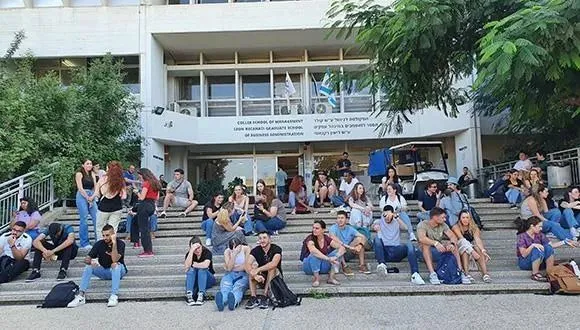
A new study by Tel Aviv and Ben-Gurion Universities reveals a phenomenon of "chivalrous sexism" towards women in need. According to the study, about 2 out of 3 men (62%) would be willing to help a woman in distress whose house burned down - but fewer men (45%) would donate money to a woman whose business burned down. On the other hand, when the researchers examined the willingness of men to donate to other men, the trend that emerged was the opposite - according to which most men preferred to donate to men whose business was burned thus maintaining the male hegemony.
The researchers explain the differences by the fact that men tend to help women out of 'chivalrous sexism': helping a 'damsel in distress' is part of a men's gender role, which is why a man will open the door for a woman or pull over to help her change a flat tire. But this help depends on the context: men help women if it does not challenge the male hegemony, in other words, if their help will empower women, then men will be less willing to help them.
The new study was conducted by Prof. Danit Ein-Gar from the Coller School of Management at Tel-Aviv University in collaboration with Dr. Orli Barkat, a post-doctoral student at Princeton University, and Prof. Tahila Kogot from Ben-Gurion University. The results of the study were published in the prestigious journal Group Processes & Intergroup Relations.
"When men were asked to donate, some of them found it easier to donate to a woman in her domestic, needy, and weak place than to a woman raising funds to rebuild her business." Prof. Danit Ein-Gar
According to Prof. Ein-Gar, 566 men and women from the USA participated in an online experiment. A cash prize of 10 dollars was drawn among the participants in the experiment, and the participants were asked to answer whether they would like to donate this amount to a man whose house burned down, to a woman whose house burned down, to a man whose business burned down, or to a woman whose business burned down.
Beyond the disparity in willingness to help women whose business burned down, compared to those whose house burned down, the findings also show that men donated an average amount of $4 (almost half of the winning amount) to a woman whose house burned down, compared to only $2.48 to a woman whose business house burned down.
The findings were replicated in another experiment conducted among management students at Tel Aviv University.

Prof. Danit Ein-Gar from the Coller School of Management at Tel-Aviv University
"We presented the participants with two identical requests for help from two individuals in need, a man and a woman, whose home or business caught fire," explains Prof. Ein-Gar. "We found that the biggest differences, both in the actual willingness to donate and the donation amount, were when male subjects had to choose between helping a woman's home and helping a woman's business."
"It should be noted that we did not present the fund request as a financial investment but rather as a donation: a fire raged in the area and consumed houses and shops, and now those in need are asking for help to rebuild their lives. When men were asked to donate, some of them found it easier to donate to a woman in her domestic, needy, and weak place than to a woman raising funds to rebuild her business".
Prof. Ein-Gar explains that the new research reveals the boundaries of male ’chivalry’ - and these boundaries are set by men’s hegemony in the business world. That is, gentlemanliness reaches up to the point where it does not threaten their dominant status. A similar effect was not found when men were asked to donate to another man whose business burned down, compared to a man whose house burned down. This means that men do not donate less to businesses due to some business threat, but only donate less to women’s businesses.