A new TAU study explores how accurate AI can be when assisting with diagnoses in virtual urgent care.




Research
A new TAU study explores how accurate AI can be when assisting with diagnoses in virtual urgent care.
A new study led by Prof. Dan Zeltzer, a digital health expert from the Berglas School of Economics and Alrov Center for Digital Medicine, compared the quality of diagnostic and treatment recommendations made by artificial intelligence (AI) and physicians at Cedars-Sinai Connect, a virtual urgent care clinic in Los Angeles, operated in collaboration with Israeli startup K Health. The paper was published in Annals of Internal Medicine and presented at the annual conference of the American College of Physicians (ACP). This work was supported by funding from K Health.
Prof. Zeltzer explains: "Cedars-Sinai operates a virtual urgent care clinic offering telemedical consultations with physicians specializing in family and emergency care. Recently, an AI system was integrated into the clinic—an algorithm based on machine learning that conducts initial intake through a dedicated chat incorporates data from the patient’s medical record and provides the attending physician with detailed diagnostic and treatment suggestions at the start of the visit -including prescriptions, tests, and referrals. After interacting with the algorithm, patients proceed to a video visit with a physician who ultimately determines the diagnosis and treatment. To ensure reliable AI recommendations, the algorithm—trained on medical records from millions of cases—only offers suggestions when its confidence level is high, not recommending about one out of five cases. In this study, we compared the quality of the AI system's recommendations with the physicians' actual decisions in the clinic".

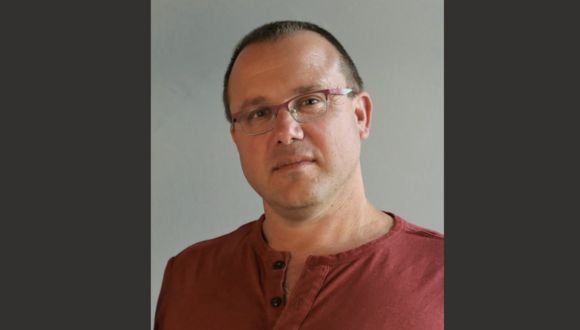
Prof. Dan Zeltzer (Photo courtesy of Richard Haldis).
The researchers examined a sample of 461 online clinic visits over one month during the summer of 2024. The study focused on adult patients with relatively common symptoms—respiratory, urinary, eye, vaginal and dental. In all visits reviewed, patients were initially assessed by the algorithm, which provided recommendations, and then treated by a physician in a video consultation. Afterward, all recommendations—from both the algorithm and the physicians—were evaluated by a panel of four doctors with at least ten years of clinical experience, who rated each recommendation on a four-point scale: optimal, reasonable, inadequate, or potentially harmful. The evaluators assessed the recommendations based on the patient's medical history, the information collected during the visit, and transcripts of the video consultations.
The compiled ratings led to interesting conclusions: AI recommendations were rated as optimal in 77% of cases, compared to only 67% of the physicians' decisions; at the other end of the scale, AI recommendations were rated as potentially harmful in a smaller portion of cases than physicians' decisions (2.8% of AI recommendations versus 4.6% of physicians' decisions). In 68% of the cases, the AI and the physician received the same score; in 21% of cases, the algorithm scored higher than the physician; and in 11% of cases, the physician's decision was considered better.
The explanations provided by the evaluators for the differences in ratings highlight several advantages of the AI system over human physicians: First, the AI more strictly adheres to medical association guidelines—for example, not prescribing antibiotics for a viral infection; second, AI more comprehensively identifies relevant information in the medical record—such as recurrent cases of a similar infection that may influence the appropriate course of treatment; and third, AI more precisely identifies symptoms that could indicate a more serious condition, such as eye pain reported by a contact lens wearer, which could signal an infection. Physicians, on the other hand, are more flexible than the algorithm and have an advantage in assessing the patient's actual condition. For example, if a COVID-19 patient reports shortness of breath, a doctor may recognize it as relatively mild respiratory congestion, whereas the AI, based solely on the patient's answers, might refer them unnecessarily to the emergency room.
Prof. Zeltzer concludes: "In this study, we found that AI, based on a targeted intake process, can provide diagnostic and treatment recommendations that are, in many cases, more accurate than those made by physicians. One limitation of the study is that we do not know which physicians reviewed the AI's recommendations in the available chart, or to what extent they relied on the recommendations. Thus, the study only measured the accuracy of the algorithm’s recommendations and not their impact on the physicians. The study's uniqueness lies in the fact that it tested the algorithm in a real-world setting with actual cases, while most studies focus on examples from certification exams or textbooks. The relatively common conditions included in our study represent about two-thirds of the clinic's case volume, thus the findings can be meaningful for assessing AI's readiness to serve as a decision-support tool in medical practice. We can envision a near future in which algorithms assist in an increasing portion of medical decisions, bringing certain data to the doctor's attention, and facilitating faster decisions with fewer human errors. Of course, many questions remain about the best way to implement AI in the diagnostic and treatment process, as well as the optimal integration between human expertise and artificial intelligence in medicine".
Other authors involved in the study include Zehavi Kugler, MD; Lior Hayat, MD; Tamar Brufman, MD; Ran Ilan Ber, PhD; Keren Leibovich, PhD; Tom Beer, MSc; and Ilan Frank, MSc. Caroline Goldzweig, MD MSHS, and Joshua Pevnick, MD, MSHS.

Research
New research highlights a unique evolutionary adaptation: a bat’s tail acting as a reverse walking cane.
A new study from Tel Aviv University reveals that the Greater Mouse-Tailed Bat (Rhinopoma microphyllum) uses its long tail as a natural tactile sensor to navigate backward in dark caves. The researchers discovered that the bat’s long tail functions as a dynamic sensing tool, enabling it to avoid obstacles and orient itself in complex environments while climbing backward—especially when other sensory abilities like vision and echolocation are limited. The study found that when the tail was numbed with a local anesthetic, the bats' ability to navigate around obstacles while crawling backward and the speed of their movement decreased significantly.
The research was led by Sahar Hajyahia and Mor Taub, students in the laboratory of Prof. Yossi Yovel of Tel Aviv University’s School of Zoology in the Wise Faculty of Life Sciences and the Sagol School of Neuroscience. The study was published in the scientific journal iScience.
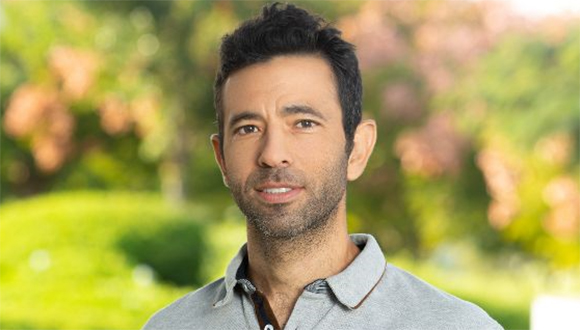
Prof. Yossi Yovel.
Professor Yossi Yovel, a 2021 Kadar Family Award recipient, explains: “During the study, the bats crawled up a vertical maze while moving backward as we recorded their movement using an advanced tracking system. The bats used their tails like a blind walking cane, swinging them from side to side to detect obstacles and climb more safely and efficiently. In contrast, when the tail was numbed, the climbing time increased by an average of 10%, and the bats made more lateral movements instead of moving upward, apparently trying to find their way”.
The researchers also noted that the bats demonstrated a remarkable ability to distinguish between different textures using their tails. They were able to differentiate between a fine wooden grid (1 cm intervals) and a sparser grid (1.5 cm), highlighting the tail's complex ability to serve as an exceptionally sensitive tactile sensor.

Greater Mouse-Tailed Bat (Photo courtesy of Jens Rydell).
Professor Yossi Yovel concludes: “In most bats, the tail is very short and integrated into the wing membrane. In Rhinopoma, however, the tail remains long and free, and to the best of our knowledge, they are the only bats that use it to sense their immediate surroundings. This is another example of how evolution adapts animals’ senses to meet specific needs—in this case, moving backward in dark places around obstacles and other bats. Many bats crawl backward on dark walls and cannot use their frontal senses like vision and sonar to ‘see’ behind them. One can think of the tail as a sort of reverse sensor for the Rhinopoma. This discovery opens the door to further research on tail usage as a sensor in other animal species. Additionally, the findings could inspire the development of new sensory technologies inspired by nature, such as robotic navigation systems for complex environments”.

Research
A first-of-its-kind AI study finds 23.9% exercise for appearance and 18.9% for health.
A new study from Tel Aviv University used AI tools for the first time to discover what motivates people to exercise and which strategies are most effective for maintaining physical fitness.
The researchers used tools of artificial intelligence and machine learning to scan thousands of posts on the Reddit social network. They found that 23.9% of the users who engage in sports do so to improve their appearance, 18.9% exercise to maintain their physical health, and 16.9% exercise to maintain their mental health.
The study was led by a team of researchers from TAU's School of Public Health, Faculty of Medical and Health Sciences : Dr. Michal Shmueli-Scheuer, Yedidya Silverman, Prof. Israel Halperin, and Prof. Yftach Gepner. The paper was published in the Journal of Medical Internet Research (JMIR).
Prof. Gepner explains: "Researchers in our field usually rely on cumbersome old-school questionnaires, containing inherent biases, to understand why people engage in sports and what strategies help them adhere to physical activity. It's an astonishing phenomenon: science tells us that if we put just over two hours a week into physical activity, we can prevent 30% of diseases, improve our quality of life, and extend our lifespan; and yet, less than a quarter of the population actually does this. Why? What have we failed to see? While we all wish our loved ones good health on their birthday, a wish for 'good workouts' is quite rare… But there is a way to be healthy - by exercising. That’s why it's crucial to understand what really motivates people to engage in physical activity and what helps them stick with it".
"Our findings are not based on self-reporting, a representative sample, a questionnaire, or a survey. This is, in plain terms, the real reason why people exercise. And the answer is that people mainly exercise to look good. In questionnaires, people claim they want to be healthy, but in reality, they want six-pack abs. These findings are important because they teach us how to address the public, how to persuade people to get off the couch, promote health, and prevent disease", he adds.
Beyond the question of motivation, the researchers also sought to identify strategies that induce people to engage in physical activity. According to the Reddit posts, 30% rely on workout habits (e.g. morning/evening, every Saturday morning), 13.9% set goals (such as losing weight or running 5 km), 12.1% enjoy the activity itself, 9.7% enjoy socializing during workouts, 8.9% use media (such as YouTube workout videos), 2.8% use fitness apps, and 2.5% have made a financial commitment to adhere to physical activity.
"The results are quite significant", explains Prof. Gepner. "One strategy is more successful and therefore more recommended than others—creating exercise habits. If you want to be healthier, you need to develop healthy habits, period. Instead of a morning cigarette, drink two glasses of water and go out for a run. 30% is an empirical statistic that is hard to argue with, so as the Head of the Department of Health Promotion, I can confidently say to the public: develop habits and be healthy".

Research
A novel AI-based method reveals how cells respond to drug treatments.
Researchers from Tel Aviv University have developed an innovative method that can help to understand better how cells behave in changing biological environments, such as those found within a cancerous tumor. The new system, called scNET, combines information on gene expression at the single-cell level with information on gene interactions, enabling the identification of important biological patterns such as responses to drug treatments. The scientific article published in the Nature Methods journal explains how scNET may improve medical research and assist in the development of treatments for diseases. The research was led by PhD student Ron Sheinin under Prof. Asaf Madi, from the Faculty of Medical and Health Sciences and Prof. Roded Sharan, head of the School of Computer Science and AI at Tel Aviv University.
Today, advanced sequencing technologies allow the measurement of gene expression at the single-cell level and, for the first time, researchers can investigate the gene expression profiles of different cell populations within a biological sample and discover their effects on the functional behavior of each cell type. One fascinating example is understanding the impact of cancer treatments – not only on the cancer cells themselves but also on the pro-cancer supporting cells or anti-cancer cell populations, such as some cells of the immune system surrounding the tumor.
Despite the amazing resolution, these measurements are characterized by high levels of noise, which makes it difficult to identify precise changes in genetic programs that underlie vital cellular functions. This is where scNET comes into play.
Ron Sheinin: "scNET integrates single-cell sequencing data with networks that describe possible gene interactions, much like a social network, providing a map of how different genes might influence and interact with each other. scNET enables more accurate identification of existing cell populations in the sample. Thus, it is possible to investigate the common behavior of genes under different conditions and to expose the complex mechanisms that characterize the healthy state or response to treatments".
Prof. Asaf Madi: "In this research, we focused on a population of T cells, immune cells known for their power to fight cancerous tumors. scNET revealed the effects of treatments on these T cells and how they became more active in their cytotoxic activity against the tumor, something that was not possible to discover before due to the high level of noise in the original data".
Prof. Roded Sharan: "This is an excellent example of how artificial intelligence tools can help decipher biological and medical data, allowing us to gain new and significant insights. The idea is to provide biomedical researchers with computational tools that will aid in understanding how the body's cells function, thereby identifying new ways to improve our health".
In conclusion, scNET demonstrates how combining AI with biomedical research could lead to the development of new therapeutic approaches, reveal hidden mechanisms in diseases, and propose new treatment options.