A new study from Tel Aviv University’s Moshe Dayan Center finds major shifts in political attitudes among Arab citizens of Israel, including record-high support for an Arab party joining the next governing coalition.




Research
A new TAU study reveals how the insurance sector, one of the world’s largest financial forces, can take a leading role in the global response to climate change.
As global warming intensifies and extreme weather events become more frequent, insurance systems worldwide are under pressure. In the United States, for instance, rising flood and hurricane damages have driven major reforms in the federal flood insurance program (NFIP), reducing public subsidies and raising costs for homeowners.
Published in Humanities and Social Sciences Communications (Nature Portfolio), the study examines how climate change–driven hurricanes could impact profitability in the U.S. homeowners’ insurance market — and proposes a new approach: transforming anticipated financial losses into climate-mitigation investments.
The research was conducted by a joint team from Tel Aviv University, Max Stern Yezreel Valley College, and the University of Haifa, including PhD student Moran Nabriski and Prof. Colin Price from TAU’s Porter School of the Environment and Earth Sciences, and Dr. Ruslana Palatnik from the University of Haifa.
Insurance is a major economic force with a dual role; on the one hand it is a risk manager, and on the other a large institutional investor with long-duration capital. Given its systemic weight – and because insurance is fundamentally a pooling mechanism that links economic sectors – the study calls for the industry to be a proactive partner in addressing climate change. It should not only react to extreme events but also reduce risk at its source (akin to building-safety standards that prevent fire losses).
Insurance plays a dual role in the global economy: it manages risk and serves as a powerful institutional investor. Given its influence and financial reach, the researchers argue that the industry should act not only as a responder to natural disasters, but as a proactive force in reducing climate risks, much like building codes prevent fire losses before they occur.
By combining a market-equilibrium model with climate-driven hurricane damage projections, the study shows that insurers’ profitability could decline by 11%–100% across modeled scenarios, leading to higher premiums and reduced coverage. Redirecting that expected loss into emissions-reduction initiatives, the researchers note, could generate climate benefits that far exceed the industry’s direct economic share.
“Insurance is commonly viewed as a tool for transferring risk over time and across geographies, yet natural disasters occur in the same places at the same time,” said lead author Moran Nabriski. “As natural disasters intensify, the insurance industry should represent the economy not only as a responder to a changing climate, but also as a leader in confronting it. Because insurance connects all sectors of the economy, it can leverage that position into a coordinated effort with a meaningful impact on climate risk.”
The study provides a quantitative framework for assessing future risks and demonstrates how insurers’ long-term capital can become a powerful engine for financing global climate solutions.

Research
Two Orit books (the Torah of Beta Israel – Ethiopian Jewry) from the 15th century were discovered by the Orit Guardians program of TAU's Department of Biblical Studies.
A Rare Discovery: A traveling workshop of TAU's Orit Guardians program discovered two 15th-century Orit books – the oldest found to date in the possession of Beta Israel. The Orit Guardians Master's program was established about five years ago, with the primary goal of studying, preserving, and carrying on the Biblical heritage of Ethiopian Jewry. The workshop was held in collaboration with the Ethiopian Jewry Heritage Center and the National Library of Israel, which documented the books and established the Digital Archive of Beta Israel's Scriptures. Recently, these books were exposed at a special event held at ANU – Museum of the Jewish People, led by the Koret Center for Jewish Civilization (a collaboration between ANU and TAU), which supports and advances the Orit Guardians program.
The program's initiator, Prof. Dalit Rom-Shiloni from the Department of Biblical Studies, Chaim Rosenberg School of Jewish Studies and Archaeology, explains: "The Orit of Beta Israel includes the Five Books of the Torah, as well as the Books of Joshua, Judges, and Ruth. So far, we have documented four Orit books, including the two from the 15th century, as well as 13 other sacred books. All the sacred books of Ethiopian Jewry are written in Ge'ez, a language known only to the Kessim, and each manuscript has its own fascinating story. They have been passed down through generations from father to son, and some were given to Kessim by their teachers — Jewish monks who taught the sacred traditions in Ethiopia. The books were carefully guarded and preserved, with some of their owners even risking their lives to bring them to Israel. Today, most of these books are privately owned by Kessim and their families and used as “living books” in the prayer houses of Ethiopian Jewish communities across Israel. Until now, they were inaccessible to interested individuals of the general public, nor to the research world, and we intend to locate as many books as possible for preservation, digitization, and academic study."
To this end, a unique traveling workshop was held in June 2024, with participants including: Prof. Rom-Shiloni, anthropologist Prof. Erica Weiss, linguist Dr. Anbessa Teferra, and students from the Orit Guardians program — all from Tel Aviv University, alongside representatives of the Ethiopian Jewry Heritage Center and the National Library, as well as three international experts in ancient Ethiopian sacred texts: Prof. Loren Stuckenbruck (Ludwig Maximilian University of Münich), Dr. Sophia Dege-Müller and Ted Erho (University of Hamburg). The international experts examined and dated the books using palaeography — based on script forms. To their astonishment, they found that two of the Orit books were written as early as the 15th century — the oldest discovered so far in the hands of Beta Israel. Prof. Rom-Shiloni explains: "Our discovery is causing a stir among experts in the field worldwide. While we are familiar with similar Ethiopian texts from this period or even earlier, all of those are Christian texts, not Jewish. Now, for the first time, it has been revealed that Kessim from Beta Israel possess Orit books that are over 600 years old."
In total, the workshop yielded four Orit books — two from the 15th century and two from the 18th century, as well as 13 other sacred books from the 17th to 20th centuries. All the discovered books were documented with their owners’ consent and remain in their possession — so they can continue to serve as “living books” in their communities. The documentation now enables academic research and the establishment of a digital archive at the National Library.
Prof. Youval Rotman, Academic Director of the Koret Center and faculty member in the Department of Jewish History at Tel Aviv University, added: "This is an extraordinary finding. Discovering ancient manuscripts is rare, and when they are the oldest of their kind in existence, the find is all the more exceptional. This discovery was made thanks to the Orit Guardians' emphasis on studying the textual knowledge and interpretive tradition preserved and orally transmitted over centuries within the various Beta Israel communities. The uniqueness of the program lies not only in mapping manuscripts and training students for their research but also in doing so as an integral part of the knowledge preserved within the community — thereby continuing and expanding it. The young researchers form personal connections and earn the trust of the Kessim as successors to the tradition and oral interpretation. In doing so, they connect communal-social knowledge to academic knowledge — and this is our great pride. The program unearths hidden treasures that have so far dwelt within the four walls of local synagogues, then documents and studies them and makes them accessible. Imagine a situation in which the great Bible commentaries were passed down orally through generations."
Prof. Rom-Shiloni concludes: "Through the traveling workshop of the Orit Guardians program we discovered 17 sacred books of Beta Israel held by Kessim across Israel and still used as “living books” in the prayer houses of Ethiopian Jewry. Among them, we discovered two Orit books — the Torah of Beta Israel — written in the 15th century, the earliest found so far in the hands of Jewish Kessim.
Alongside the excitement, we believe our discovery is only the tip of the iceberg. It is likely that many more sacred books of Beta Israel are held by families and Kessim around the country, and we will continue searching for them. It is important to emphasize that all manuscripts located (like those found through the workshop) will remain in the possession of their owners, while being photographed and documented to make them accessible to interested members of the community, the broader public, and researchers in Israel and around the world. Another, especially urgent task of the Orit Guardians is documenting the scholarly oral traditions of the Kessim in Ethiopia, which includes translation from Ge’ez to Amharic and interpretation of the Orit and other holy books. This heritage, transmitted only orally from generation to generation, has never been set down in writing. Today, only 18 senior Kessim, who were trained in Ethiopia and hold this knowledge, remain active in Israel, and they are aging. If we do not act quickly, we might lose this precious cultural treasure."

Research
New study by the Moshe Dayan Center at Tel Aviv University examines the views of Arab citizens in Israel – after the war with Iran
A new study by the Konrad Adenauer Program for Jewish-Arab Cooperation at TAU's Moshe Dayan Center finds that a large majority (73.2%) of Israel's Arab citizens support the inclusion of an Arab party in the government that will be formed after the next elections. In addition, the turnout of Arab voters is expected to increase.
A large majority (73.2%) support the participation of an Arab party in the next government: 41.8% support joining any government formed, and 31.4% support joining a center-left government. If elections for the Knesset were held today, the expected voter turnout in Arab society would be 57%, slightly higher than the 53.2% turnout in the 25th Knesset elections held in November 2022.
The war between Israel and Iran did not change the priorities of Arab citizens regarding fundamental political issues such as joining the government or support for Arab-Jewish political partnership. However, some impact is evident in the definition of personal identity.
Most of the Arab public (66% of respondents) believe in political cooperation between Arabs and Jews in Israel, but only 40.2% believe that the Jewish public actually supports such cooperation.
A large majority of the Arab public (75.4%) report a low sense of personal security. The two main factors negatively affecting their mood are the high incidence of violence in Arab communities (41.9%) and the ongoing war in Gaza (37.6%). At the same time, 64% of survey participants report that their financial situation is relatively good.
54% of survey respondents stated that the most important issue for the Arab public today is addressing the problem of violence and crime. A significant portion (23.2%) said that ending the war in Gaza is the most important issue.
The personal identity of Israel's Arab citizens includes three main components: Arab identity (36.2%), Israeli citizenship (30.3%), and religious affiliation (21.4%). For a relatively small portion of this public (9.7%), their Palestinian identity is the most important.
The study was initiated by the Konrad Adenauer Program for Jewish-Arab Cooperation, operating under the German Konrad Adenauer Stiftung at the Moshe Dayan Center for Middle Eastern and African Studies at Tel Aviv University.
Dr. Arik Rudnitzky, Director of the Konrad Adenauer Program for Jewish-Arab Cooperation at the Moshe Dayan Center: “A large, solid majority of Israel's Arab citizens support political partnership between Arabs and Jews, as well as the inclusion of an Arab party in the government that will be formed after the next elections. The importance of this political standpoint cannot be overstated".
"It should be understood against the backdrop of a harsh reality in which the mood in the Arab public is low due to the rampant violence in Arab communities, the negative effects of the war in Gaza, and also the recent brief war with Iran, which starkly exposed the severe lack of protective facilities in Arab communities. Nevertheless, and contrary to expectations, Israel's Arab citizens refuse to despair and look soberly at the day after the war. According to this survey, voter turnout of Arab citizens in the next Knesset elections will be slightly higher than in the elections of November 2022. Opinions are divided on whether the precedent of the inclusion of Arab party Ra’am in the Bennett-Lapid government (2021-22) was successful, but even those who criticize MK Mansour Abbas (Head of Ra'am) for this move do not necessarily oppose the attempt itself — rather, they believe Ra’am could have achieved more. Thus, precisely in the context of the longest and harshest war in the history of the Israeli-Palestinian conflict, the survey points to the hope residing in the hearts of Arab citizens for establishing a political partnership between Arabs and Jews in the day after the war".
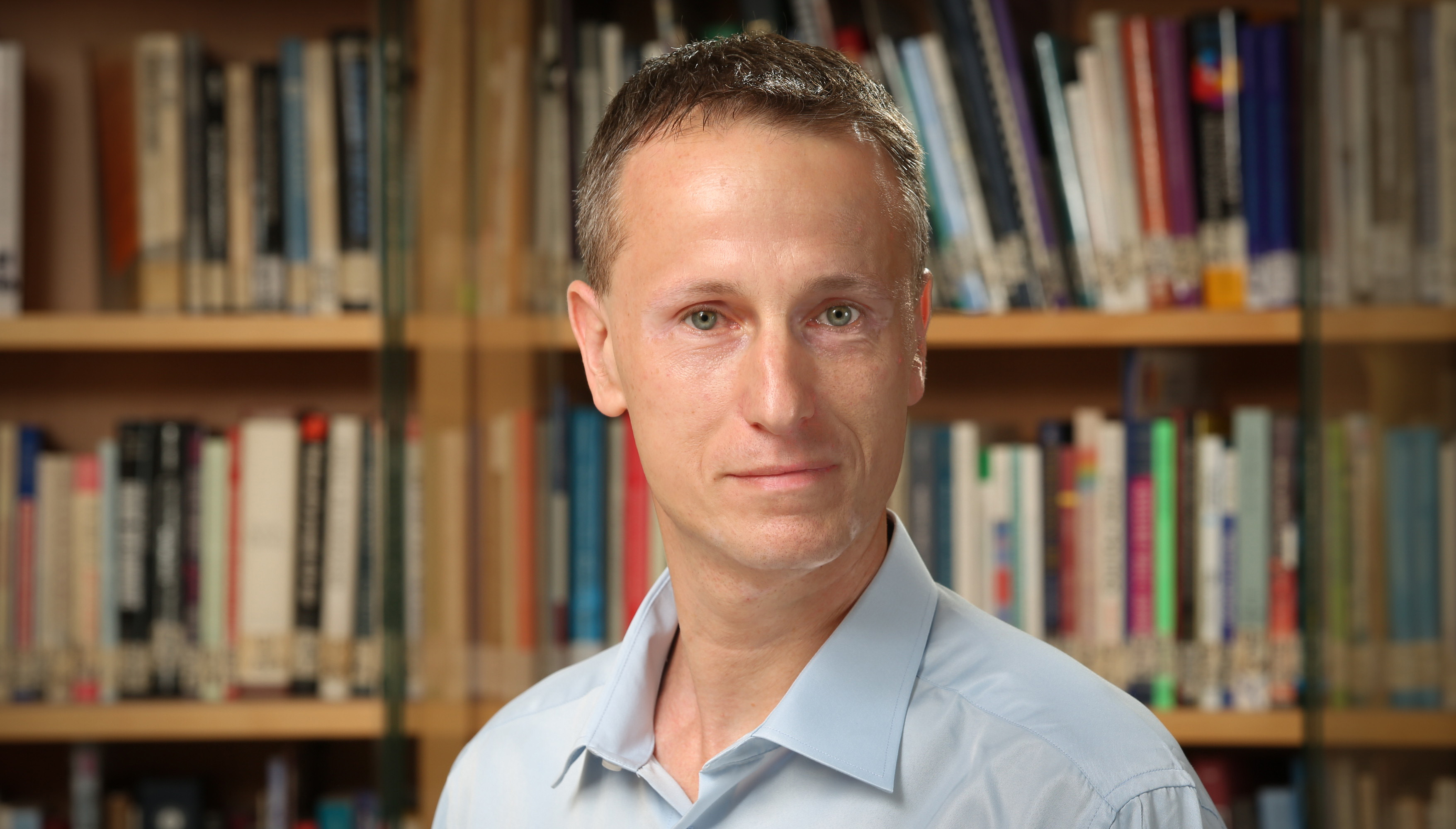
Dr Arik Rudnitzky

Research
Did Early Humans Smoke Meat Million Years Ago?
Did prehistoric humans know that smoking meat could preserve it and extend its shelf life? Researchers from the Alkow Department of Archaeology and Ancient Near Eastern Cultures at Tel Aviv University believe they did. Their new study presents a fresh perspective on a question that has long preoccupied prehistory scholars: What prompted early humans to begin using fire? According to the researchers, early humans, who primarily consumed large game, required fire not for cooking, but to smoke and dry meat so that it would not rot, thereby preserving it for extended periods and keeping it safe from predators and scavengers.
This insight fits into a broader unifying theory, developed by the same researchers, which explains many prehistoric phenomena based on human dependence on calories derived from large animals, alongside a continuous decline in the size of animals hunted throughout prehistoric periods. The study was conducted by Dr. Miki Ben-Dor and Prof. Ran Barkai of the Alkow Department of Archaeology and Ancient Near Eastern Cultures at Tel Aviv University and was published in the journal Frontiers in Nutrition.
Prof. Barkai explains: “The origins of fire use is a ‘burning’ topic among prehistory researchers around the world. It is generally agreed that by 400,000 years ago, fire use was common in domestic contexts—most likely for roasting meat, and perhaps also for lighting and heating. However there is controversy regarding the preceding million years, and various hypotheses have been put forward to explain why early humans began using fire. In this study, we sought to explore a new perspective on the issue”.
Dr. Ben-Dor adds: “For early humans, fire use was not a given, and at most archaeological sites dated earlier than 400,000 years ago, there is no evidence of the use of fire. Nevertheless, at several early sites, there are clear signs that fire was used, but without burnt bones or evidence of meat roasting. We understand that early humans at that time—mostly Homo erectus—did not use fire regularly, but only occasionally, in specific places and for special purposes. The process of gathering fuel, igniting a fire, and maintaining it over time required significant effort, and they needed a compelling, energy-efficient motive to do so. We have proposed a new hypothesis regarding that motive”.
The researchers reviewed the existing literature on all known prehistoric sites dated between 1.8 million and 800,000 years ago where evidence of fire use was found. There are nine such sites worldwide, including Gesher Benot Ya'aqov and Evron Quarry in Israel, six sites in Africa, and one site in Spain. Additionally, they relied on ethnographic studies of contemporary hunter-gatherer societies, aligning their behavior with the conditions that prevailed in ancient environments.
Dr. Ben-Dor: “We examined what the nine ancient sites had in common, and found that all contained large quantities of bones from large animals—mostly elephants, but also hippopotamuses, rhinoceroses, and others. From previous studies, we know that these animals were extremely important to early human diets and provided most of the necessary calories. The meat and fat of a single elephant, for example, contain millions of calories, enough to feed a group of 20–30 people for a month or more. A hunted elephant or hippopotamus was thus a real treasure—a kind of meat and fat ‘bank’ that needed to be protected and preserved for many days since it was coveted not only by predators but also by bacteria”.
An analysis of the findings and calculations of the significant energetic advantage of preserving meat and fat led the researchers to a new conclusion, never before proposed: fire served two vital purposes for early humans—first, to guard the large game from other predators and scavengers seeking to seize the ‘treasure’, and second, to preserve the meat through smoking and drying, preventing spoilage and making it edible for a long period.
Prof. Barkai concludes: “In this study, we propose a new understanding of the factors that motivated early humans to begin using fire: the need to safeguard large hunted animals from other predators, and to preserve the vast quantity of meat over time. It is likely that once the fire was produced for these purposes, it was also occasionally used for cooking—at zero marginal energetic cost. Such use may explain evidence of fish roasting from around 800,000 years ago at Gesher Benot Ya'aqov. The approach we propose fits well into a global theory we have been developing in recent years, which explains major prehistoric phenomena as adaptations to the hunting and consumption of large animals, followed by their gradual disappearance and the resulting need to derive adequate energy from exploiting smaller animals”.

Prof. Ran Barkai.