
Helping Heal a Hurting Generation
TAU trains staff to spot and respond to student distress


A young woman sits in the back row of a large lecture hall. As the professor glances up from his presentation, he notices the student’s head drop into her hands and her awkward attempt to hide her tear-streaked face. He pauses mid-sentence, not knowing how to react, then turns his attention quickly back to the large screen and resumes his lecture.
These scenarios are likely taking place across Israeli campuses as students face the aftermath of two years of war. At Tel Aviv University, staff and faculty have been recruited to help struggling students through a series of online workshops on recognizing emotional stress. Run by the TAU Student Success Center's (SSC) Psychological Services Unit, the workshops equip participants to reach out to students and colleagues and direct them to University resources.
It Takes a Village
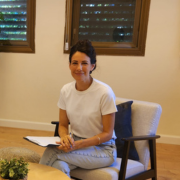
“After a prolonged state of heightened alert, of being in survival mode, students are just now truly grappling with all the pain and grief they suppressed,” said Dr. Liat Sorski, a clinical psychologist, researcher in the field of psychoneuroimmunology, and the Mental Health Awareness Coordinator at the SSC. “After two years of repeated trauma, we’re in the post-trauma stage, and it’s a critical stage.”
She believes that academic and administrative employees, who often see students daily, should have the ability to identify warning signs of traumatized students and be trained in how to handle sensitive situations and conversations. As adults who serve as mentors, teachers and role models, University employees have a responsibility for the well-being of students, and that includes their emotional state, emphasized Dr. Sorski.
Participants in the online workshops have included administrative assistants, student coordinators, lecturers, senior faculty, department heads, and heads of schools.
The feedback from staff has been overwhelmingly positive. “Many expressed how much they needed this kind of training and how detailed and helpful the workshop was,” said Dr. Sorski.
Professor or Therapist?
The training, led by Dr. Sorski since the beginning of the academic year, focuses on recognizing common reactions to all forms of distress and trauma, addressing both overt and hidden signs, responding in various ways while still respecting students’ privacy, and appropriately handling situations such as crying or other emotional outbursts.
“It’s ok to stop the class and allow the student to step out and gather themselves,” said Dr. Sorski. “And it’s ok to address the entire class and acknowledge the situation – we all went through a difficult period. We have to normalize the expression of our feelings.”
Just as important to understand is what not to do in these situations. Dr. Sorski acknowledged the urge to share personal experiences in an attempt to identify with a student but stressed that this is not an appropriate response. Also not recommended is attempting to provide advice or counseling.
“You are not a therapist, that’s not your role,” she said. Instead, staff should make the student feel seen and acknowledge their hardship, then direct them to appropriate resources.
Dr. Sorski also highlighted populations at higher risk of experiencing difficulties, such as foreign students who lack a support network, and reviewed in depth the University’s support mechanisms: the Student Success Center’s Psychological Services Unit, the network of faculty advisors, and the National Center for Traumatic Stress and Resilience; as well as national mental health resources outside the University.
The lectures are part of a wide array of services the Psychological Services Unit provides to students and staff. In the coming weeks, Dr. Sorski will be leading workshops for students this time, teaching coping strategies for stress and anxiety.
For more information on the Student Success Center’s mental health services, go to https://deanstudents.tau.ac.il/psychological-services.
Related Articles